

















SANU 2nd Home KOSO SANU 2nd Home KOSO SANU 2nd Home KOSO
- 敷地 地址
-
長野県安曇野市
长野县安云野市
- 主要用途 设施用途
-
宿泊施設
民宿
- 建築面積 延床面積 建筑投影面积
-
69.35㎡
72.97㎡
69.35㎡
- 施主 施主
-
株式会社Sanu
株式会社Sanu
- 設計 设计方
-
株式会社小大建築設計事務所
小大建筑设计事务所
- 担当 负责人
-
小嶋伸也・小嶋綾香・石川岳・辨野梨紗子
小小嶋伸也・小嶋綾香・石川岳・辨野梨紗子
- 施工 施工
-
株式会社木下工房
株式会社木下工房
- 写真 摄影
-
堀越圭晋/エスエス
堀越圭晋/エスエス

かつてこの地には‘この自然があれば⼰楚、この地があれば⼰楚、この人がいれば⼰楚‘の考えのもと「⼰楚(こそ)」と名付けられたギャラリーがありました。北アルプスの麓、豊かな水脈が流れる安曇野の地に、そんな起源を持った建築は凛と佇んでいました。34年前、安曇野の建築家萬羽増雄が設計した素晴らしい作品であり、ギャラリーの閉館後は萬羽さんご自身がアトリエとして手を加えながら丁寧に使われていました。われわれは、ギャラリーからアトリエ、そして今回宿泊施設へと用途は変わっても、この大地に根ざす建築を継承しつつ、訪れるゲストにとってこの土地の固有性を感じることができるような設計を試みました。


元々内外を横断する地杉の黒板塀が、流れるような安曇野の風を表現するかのごとく美しく設計されていました。今回の改修では、更にその地杉を内部深くまで連続させ屋外テラスまでも有機的に繋げることにより、既存建築と融合させながら宿泊施設としての心地良い居場所を作り上げていきました。
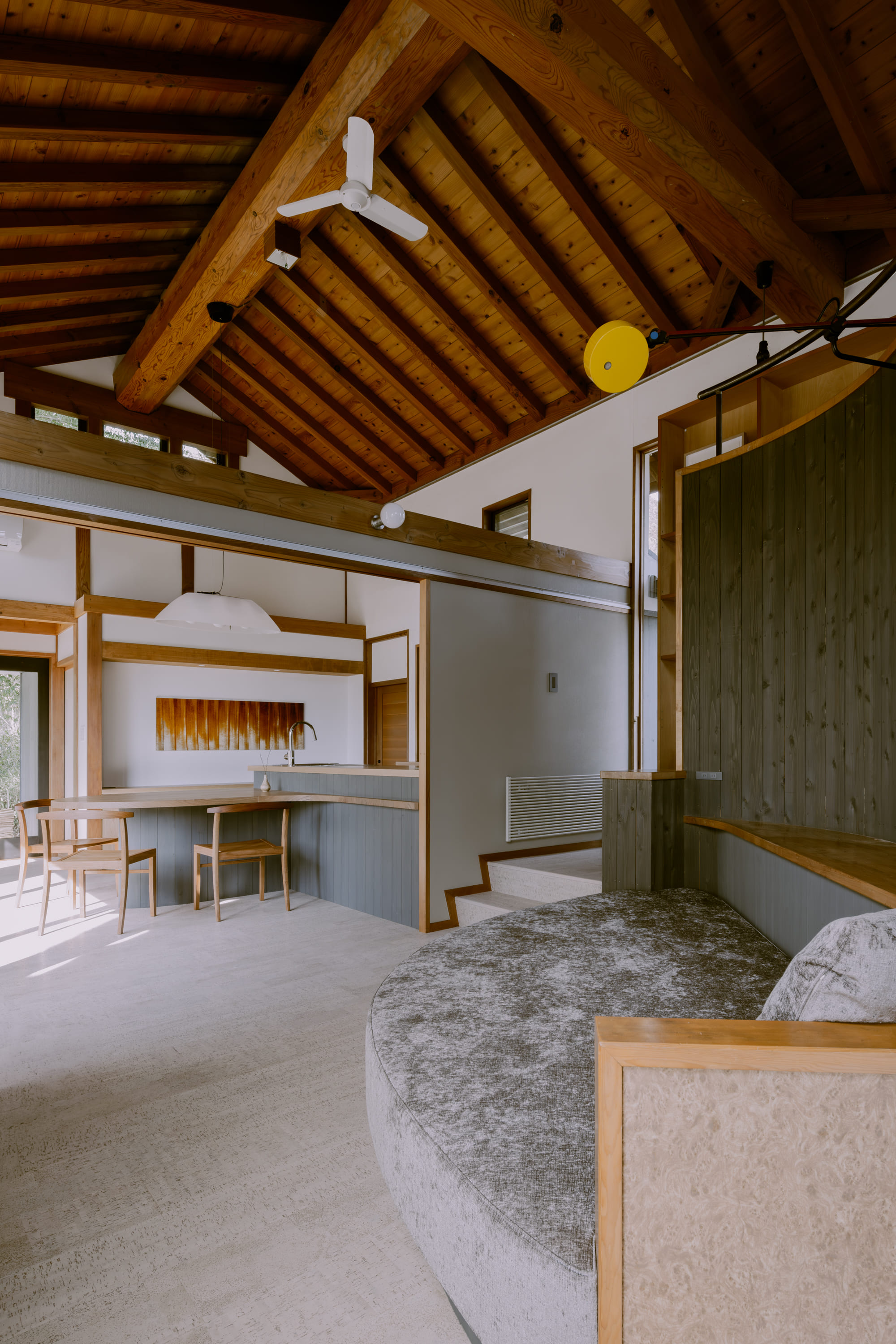
新しく作った杉板塀の内側には、暖炉を囲みながら寛げる円形ソファーの団欒空間や、一体となって食事を楽しむ食の場を新たに作り、柔らかい曲面の杉材がその空間を包み込んでいます。北アルプスを望む屋外テラス空間は火を囲みながら自然と対峙できるよう、円形のベンチを造作しています。
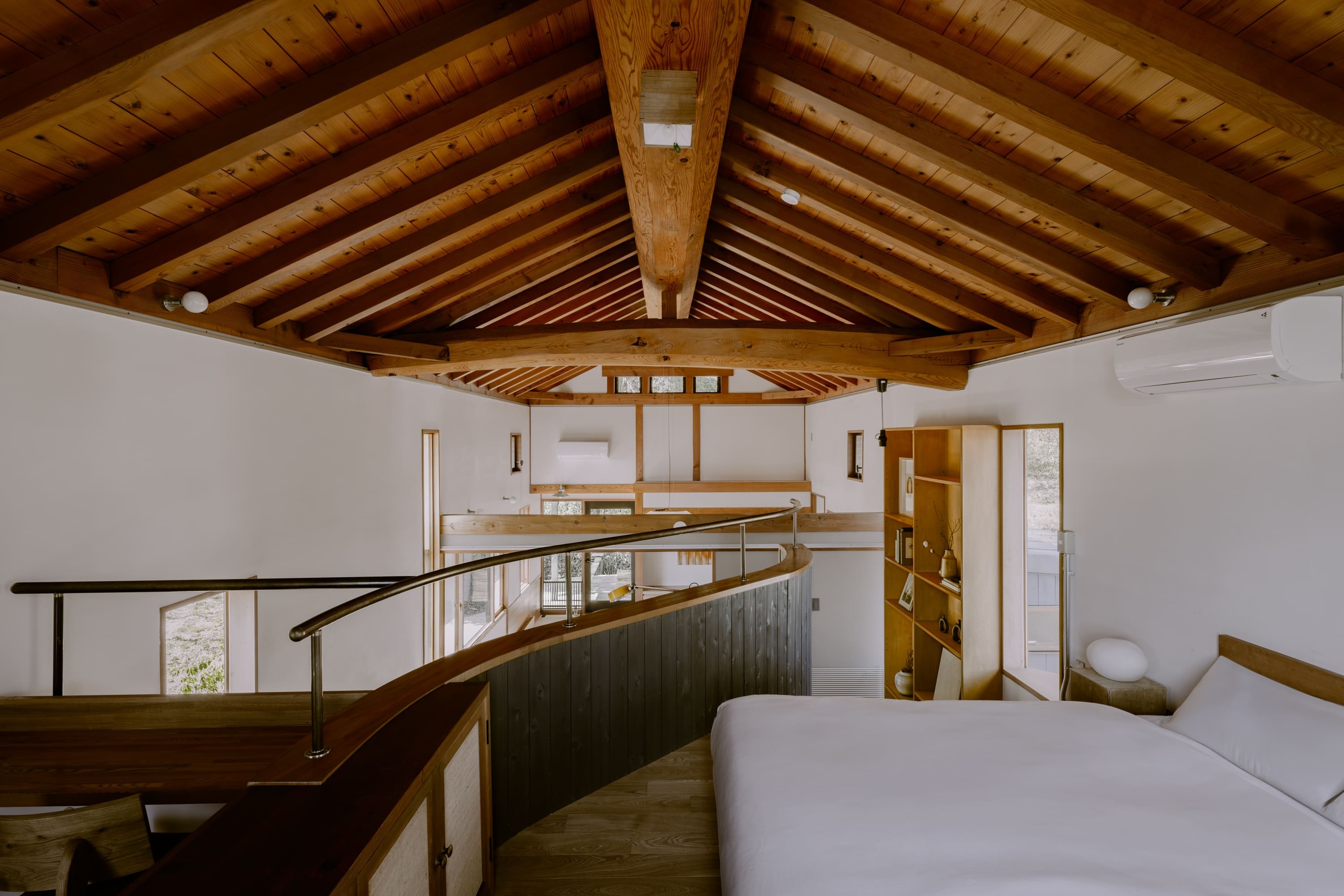
また内部空間は、元々棟木を覆い隠していた天井材や照明器具を解体し、迫力ある棟木を際立たせるように改修しています。土蔵の様式で作られた無柱の大空間が現れ、600ミリ角で10メートルの長さともなる、現代では考えられない程太く長い棟木が屋根を支え自然の生命力を表現しています。

力強い棟木と天井材の杉の節や木目を間近に感じながら、階段を上がった先には、漆喰で包まれた柔らかい寝室空間が広がります。寝室に隣接して、コックピット型の書斎を配置し、吹き抜けから棟木や無柱空間を見下ろしながら、旅先で読書をしたり手紙が書ける空間としました。


もう一つの寝室は、質感の美しいざらざらとした珪藻土と繊細な障子で包みこんでいます。夕暮れ時は障子からやわらかい光が拡散され、日が暮れた後も、信州で江戸時代から伝わる内山和紙で制作した照明がうっすらと明かりを灯し、しなやかな空気感がある寝室となっています。薬品を使わず雪晒しという技法で繊維を漂白することで、白くふっくらした美しい内山和紙が出来ます。ベッドヘッドには安曇野の水や風、空気といったといった自然界の誕生をイメージした唐紙版画を制作し、日が昇る時間帯には一定の角度から少し唐紙が反射して繊細にきらっと光るような現象を表現することで、1日の滞在を通して安曇野の美しさをゲストに感じて頂けたらと考えています。


他にも漆刷毛で職人さんが一枚一枚丁寧に仕上げた信州の漆を使ったアート、アルプスの山々を表現した暖簾、長年かけて苔色になった土瓦屋根、安曇野のカラマツの一枚板や枕木、木製家具を空間全体に散りばめることで、この地の職人さんの手仕事の温かみや自然の風合いを存分に感じることが出来る空間として再生しています。木材の加工もあえて日光や風雨に晒して風化させ、切りっぱなし、傷もつきっぱなしという、自然そのものを感じられる表現としています。
既存の自然素材を丁寧に修復し⻑く使うことで⾃然負担を最⼩化し、新たに取り⼊れる造形はこの建築の起源を尊重しながら素材は循環素材や地域資材を選定することで、SANUの「Live with nature./自然と共に生きる。」という理念を体現することを狙いました。
これまでの34年の年月を経ても、今なおその印象的な美しさを保ち自然と調和している存在感がここから先数十年続いていければと願っております。
在阿尔卑斯山脉北面的山脚,流淌着丰富的水系的安云野大地,有一座拥有此蕴意的建筑凛然而立。这栋建筑是在34年前,由安云野的建筑师万羽增雄所设计的出色的作品。
改造前,原建筑是由「此景,此地,此人」的构思而命名为「己楚」的艺廊(己楚在日语中是因此的意思)。作为艺廊关闭后,万羽增雄又将其改造成个人设计室,受到万羽增雄的爱惜。
虽然从艺廊到设计室,再由我们改造成民宿,但是不变的是「植根大地」的设计理念。与此同时我们还融入了地域特色,让来访的客人也能感受到特有的地域性。
原建筑室内外的隔断设计,采用了由当地杉木而制成的黑板塀。精美的杉木塀仿佛演绎出安云野吹拂着的风。这次改造,我们把杉木延伸到室内,再自然地链接到室外阳台。使原有的建筑空间得到很好的融合,同时创造出舒适的居住环境。
在新建的杉木塀的内部,被杉木柔和的曲线包围着的同时,围绕着暖炉我们设计了可以放松的圆形沙发,旅客可以度过和乐融融的时间,在新建的餐厅也可以和朋友家人聚在一起享受愉快地用餐时间。
在能展望阿尔卑斯山脉北面的室外阳台,我们设计了圆形的长椅。旅客可以坐在长椅上,围着火团,感受大自然,与自然对视。
我们把遮挡着房梁的天花板以及灯具拆除,让具有魄力的大梁更能引人注目。呈现出Dozou形式(日本传统的房屋结构)所构成的无柱大空间,长10米的600mm的四棱木材,在现代无法想象的宽度以及长度的房梁支撑着房顶所展现出的自然的生命力。
在近距离感受强有力的房梁和天井顶棚的杉木节以及木材条纹同时,穿过楼梯,呈现在眼前的是被漆喰(日本天然灰泥的一种)所包围的温馨的卧室。
紧挨着卧室的是,开放式书房。旅客可以一边感受房梁和无柱大空间,一边阅读或写信。
另一间卧室,被质感姣好,有凹凸感的硅藻土和精致的障子所包围。夕阳西下时,阳光从障子流露出柔和的微光。日落后,由江户时期在信州流传的内山和纸制作而成的灯具散发出微微灯光,营造出温馨柔和的空间氛围。内山和纸是一种采用雪晒手法而达到漂白作用的工艺和纸,和纸的纤维因雪晒而蓬松,从而呈现出饱满且纯白的精美状态。我们在床头板制作了象征安云野的水/风/空气等自然界诞生的唐纸版画。根据日照时间,唐纸在一定角度的光照下会产生反射,展现出波光粼粼的现象。我们期望旅客能在1日的停留中,感受到安云野的美好。
除此之外,还有手工工艺师使用信州漆用毛刷画出的工艺品,象征阿尔卑斯山脉的群山的暖帘,日积月累而形成的青苔色土瓦房顶,安云野唐松树的一枚板和枕木,木制家具分散布置在民宿的各个角落。我们再生了能充分感受到来自当地工艺师的手工作品的温柔以及自然质感的空间。木材的加工刻意采用自然加工手法来展现自然美,例如通过日照以及风吹雨打做风化处理,切口不刻意打磨,保持自然的残痕。
我们融入SANU的理念Live with nature,通过修复原建筑的自然材料,尽可能地减少对自然环境的负荷。新加的设计也遵循原建筑的起源,选用可循环利用材料以及当地建材。
我们期望它能将「经历34年的岁月依然保持着让人印象深刻的美态,与自然的融合」能永久的延续下去。
READ MORE SHOW LESS
- 敷地 地址
-
長野県安曇野市
长野县安云野市
- 主要用途 设施用途
-
宿泊施設
民宿
- 建築面積 延床面積 建筑投影面积
-
69.35㎡
72.97㎡
69.35㎡
- 施主 施主
-
株式会社Sanu
株式会社Sanu
- 設計 设计方
-
株式会社小大建築設計事務所
小大建筑设计事务所
- 担当 负责人
-
小嶋伸也・小嶋綾香・石川岳・辨野梨紗子
小小嶋伸也・小嶋綾香・石川岳・辨野梨紗子
- 施工 施工
-
株式会社木下工房
株式会社木下工房
- 写真 摄影
-
堀越圭晋/エスエス
堀越圭晋/エスエス
PROJECT DATA SHOW LESS
かつてこの地には‘この自然があれば⼰楚、この地があれば⼰楚、この人がいれば⼰楚‘の考えのもと「⼰楚(こそ)」と名付けられたギャラリーがありました。北アルプスの麓、豊かな水脈が流れる安曇野の地に、そんな起源を持った建築は凛と佇んでいました。34年前、安曇野の建築家萬羽増雄が設計した素晴らしい作品であり、ギャラリーの閉館後は萬羽さんご自身がアトリエとして手を加えながら丁寧に使われていました。われわれは、ギャラリーからアトリエ、そして今回宿泊施設へと用途は変わっても、この大地に根ざす建築を継承しつつ、訪れるゲストにとってこの土地の固有性を感じることができるような設計を試みました。
元々内外を横断する地杉の黒板塀が、流れるような安曇野の風を表現するかのごとく美しく設計されていました。今回の改修では、更にその地杉を内部深くまで連続させ屋外テラスまでも有機的に繋げることにより、既存建築と融合させながら宿泊施設としての心地良い居場所を作り上げていきました。
新しく作った杉板塀の内側には、暖炉を囲みながら寛げる円形ソファーの団欒空間や、一体となって食事を楽しむ食の場を新たに作り、柔らかい曲面の杉材がその空間を包み込んでいます。北アルプスを望む屋外テラス空間は火を囲みながら自然と対峙できるよう、円形のベンチを造作しています。
また内部空間は、元々棟木を覆い隠していた天井材や照明器具を解体し、迫力ある棟木を際立たせるように改修しています。土蔵の様式で作られた無柱の大空間が現れ、600ミリ角で10メートルの長さともなる、現代では考えられない程太く長い棟木が屋根を支え自然の生命力を表現しています。
力強い棟木と天井材の杉の節や木目を間近に感じながら、階段を上がった先には、漆喰で包まれた柔らかい寝室空間が広がります。寝室に隣接して、コックピット型の書斎を配置し、吹き抜けから棟木や無柱空間を見下ろしながら、旅先で読書をしたり手紙が書ける空間としました。
もう一つの寝室は、質感の美しいざらざらとした珪藻土と繊細な障子で包みこんでいます。夕暮れ時は障子からやわらかい光が拡散され、日が暮れた後も、信州で江戸時代から伝わる内山和紙で制作した照明がうっすらと明かりを灯し、しなやかな空気感がある寝室となっています。薬品を使わず雪晒しという技法で繊維を漂白することで、白くふっくらした美しい内山和紙が出来ます。ベッドヘッドには安曇野の水や風、空気といったといった自然界の誕生をイメージした唐紙版画を制作し、日が昇る時間帯には一定の角度から少し唐紙が反射して繊細にきらっと光るような現象を表現することで、1日の滞在を通して安曇野の美しさをゲストに感じて頂けたらと考えています。
他にも漆刷毛で職人さんが一枚一枚丁寧に仕上げた信州の漆を使ったアート、アルプスの山々を表現した暖簾、長年かけて苔色になった土瓦屋根、安曇野のカラマツの一枚板や枕木、木製家具を空間全体に散りばめることで、この地の職人さんの手仕事の温かみや自然の風合いを存分に感じることが出来る空間として再生しています。木材の加工もあえて日光や風雨に晒して風化させ、切りっぱなし、傷もつきっぱなしという、自然そのものを感じられる表現としています。
既存の自然素材を丁寧に修復し⻑く使うことで⾃然負担を最⼩化し、新たに取り⼊れる造形はこの建築の起源を尊重しながら素材は循環素材や地域資材を選定することで、SANUの「Live with nature./自然と共に生きる。」という理念を体現することを狙いました。
これまでの34年の年月を経ても、今なおその印象的な美しさを保ち自然と調和している存在感がここから先数十年続いていければと願っております。
在阿尔卑斯山脉北面的山脚,流淌着丰富的水系的安云野大地,有一座拥有此蕴意的建筑凛然而立。这栋建筑是在34年前,由安云野的建筑师万羽增雄所设计的出色的作品。
改造前,原建筑是由「此景,此地,此人」的构思而命名为「己楚」的艺廊(己楚在日语中是因此的意思)。作为艺廊关闭后,万羽增雄又将其改造成个人设计室,受到万羽增雄的爱惜。
虽然从艺廊到设计室,再由我们改造成民宿,但是不变的是「植根大地」的设计理念。与此同时我们还融入了地域特色,让来访的客人也能感受到特有的地域性。
原建筑室内外的隔断设计,采用了由当地杉木而制成的黑板塀。精美的杉木塀仿佛演绎出安云野吹拂着的风。这次改造,我们把杉木延伸到室内,再自然地链接到室外阳台。使原有的建筑空间得到很好的融合,同时创造出舒适的居住环境。
在新建的杉木塀的内部,被杉木柔和的曲线包围着的同时,围绕着暖炉我们设计了可以放松的圆形沙发,旅客可以度过和乐融融的时间,在新建的餐厅也可以和朋友家人聚在一起享受愉快地用餐时间。
在能展望阿尔卑斯山脉北面的室外阳台,我们设计了圆形的长椅。旅客可以坐在长椅上,围着火团,感受大自然,与自然对视。
我们把遮挡着房梁的天花板以及灯具拆除,让具有魄力的大梁更能引人注目。呈现出Dozou形式(日本传统的房屋结构)所构成的无柱大空间,长10米的600mm的四棱木材,在现代无法想象的宽度以及长度的房梁支撑着房顶所展现出的自然的生命力。
在近距离感受强有力的房梁和天井顶棚的杉木节以及木材条纹同时,穿过楼梯,呈现在眼前的是被漆喰(日本天然灰泥的一种)所包围的温馨的卧室。
紧挨着卧室的是,开放式书房。旅客可以一边感受房梁和无柱大空间,一边阅读或写信。
另一间卧室,被质感姣好,有凹凸感的硅藻土和精致的障子所包围。夕阳西下时,阳光从障子流露出柔和的微光。日落后,由江户时期在信州流传的内山和纸制作而成的灯具散发出微微灯光,营造出温馨柔和的空间氛围。内山和纸是一种采用雪晒手法而达到漂白作用的工艺和纸,和纸的纤维因雪晒而蓬松,从而呈现出饱满且纯白的精美状态。我们在床头板制作了象征安云野的水/风/空气等自然界诞生的唐纸版画。根据日照时间,唐纸在一定角度的光照下会产生反射,展现出波光粼粼的现象。我们期望旅客能在1日的停留中,感受到安云野的美好。
除此之外,还有手工工艺师使用信州漆用毛刷画出的工艺品,象征阿尔卑斯山脉的群山的暖帘,日积月累而形成的青苔色土瓦房顶,安云野唐松树的一枚板和枕木,木制家具分散布置在民宿的各个角落。我们再生了能充分感受到来自当地工艺师的手工作品的温柔以及自然质感的空间。木材的加工刻意采用自然加工手法来展现自然美,例如通过日照以及风吹雨打做风化处理,切口不刻意打磨,保持自然的残痕。
我们融入SANU的理念Live with nature,通过修复原建筑的自然材料,尽可能地减少对自然环境的负荷。新加的设计也遵循原建筑的起源,选用可循环利用材料以及当地建材。
我们期望它能将「经历34年的岁月依然保持着让人印象深刻的美态,与自然的融合」能永久的延续下去。
READ MORE SHOW LESS


